Case Study: How the Slovenian Global Forum 2025 Is Driving Sustainability in Economic and Business Events
Date of Event: June 13, 2025 Location: Maribor, Slovenia Organiser: Ministry of Economy, Tourism and Sport Certification: Planet Positive Event Rating | Final Mark: 4.03 (BBB Certified)
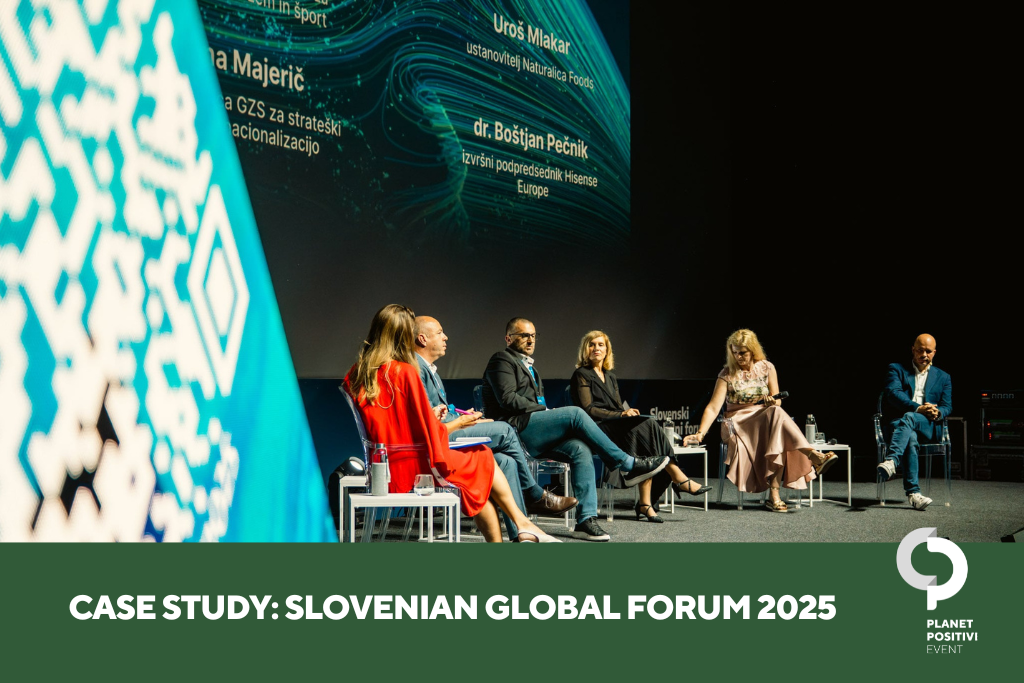
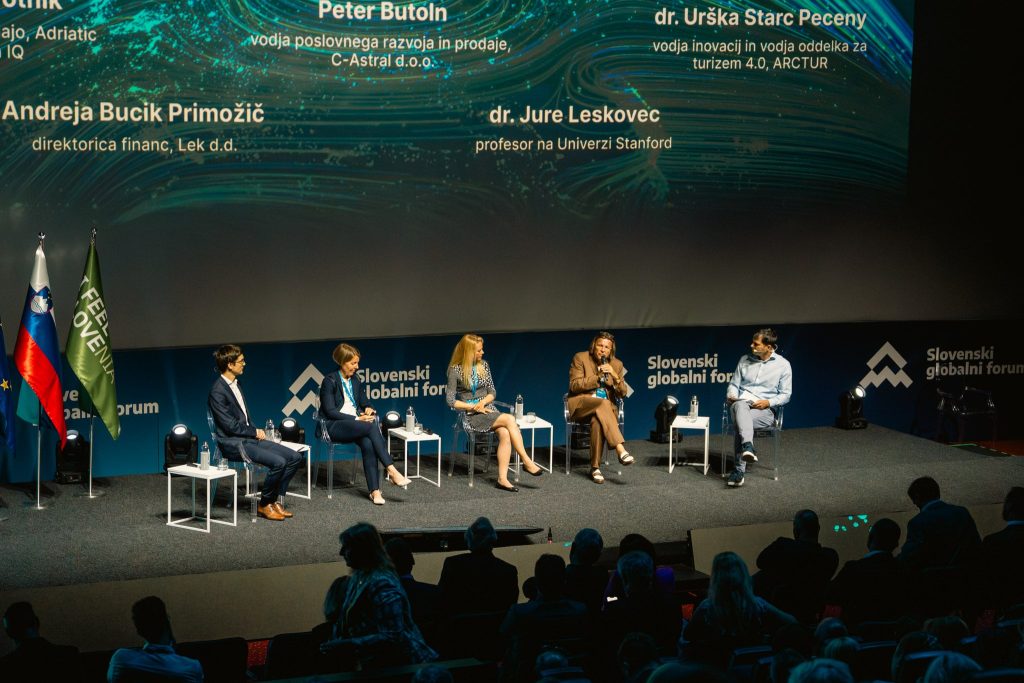
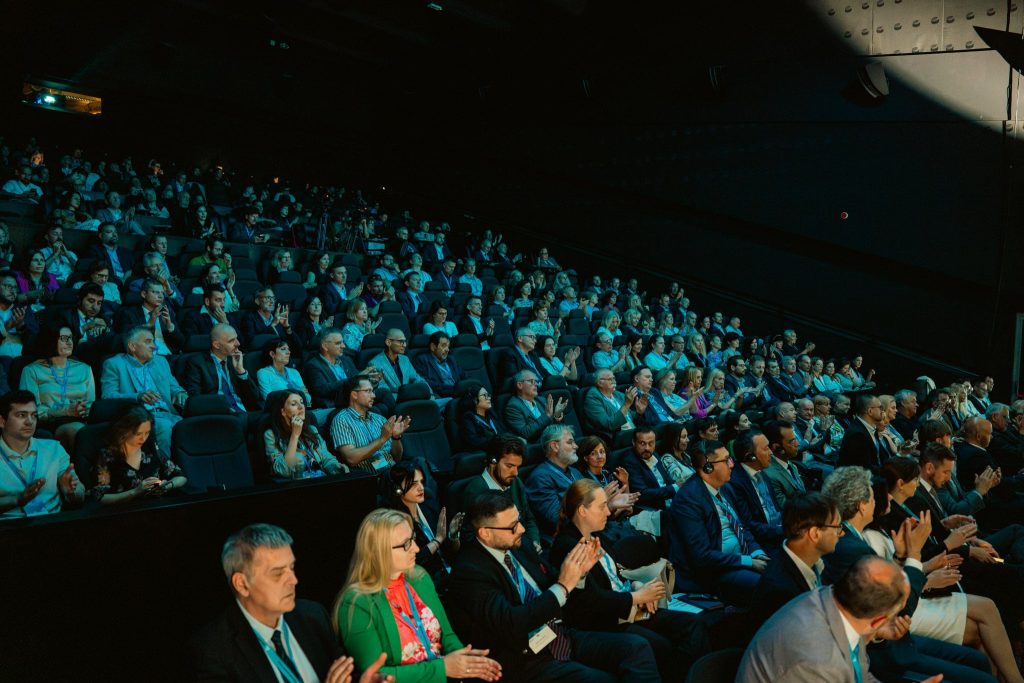
The Slovenski Globalni Forum 2025 (SGF 2025) exemplifies how national-level economic events can lead the way in sustainability while fostering innovation, business growth, and social responsibility. Hosted in Maribor, Slovenia’s second-largest city, the one-day conference gathered 394 participants, including business leaders, policymakers, and entrepreneurs, to exchange ideas on global market opportunities and sustainable development.
Photo by: SGF
A Strategically Designed Green Business Forum
SGF 2025 was evaluated under the Planet Positive Event methodology, based on internationally recognised standards such as the GHG Protocol. The event achieved an impressive rating, reflecting a well-rounded balance between environmental responsibility, social engagement, and economic impact. The total event carbon footprint’s mobility represents the largest share (57%), followed by catering (16%) and event production (13.5%). Despite these impacts, SGF 2025 achieved a commendable per-participant footprint of 23.91 kg CO₂e, placing it in the “B” category (11–44 kg CO₂e per participant), well below the regional average for events of similar scale.
Key sustainability measures included:
Energy powered entirely by renewable solar sources, ensuring clean operations.
Use of LED lighting and high-efficiency audiovisual equipment to minimise energy waste.
Local sourcing of all event materials, from decorations and catering to technical services, ensuring 100% of suppliers were from Slovenia.
Paper-only name tags, reusable glassware, and rented or donated flowers and herbs, eliminating single-use plastics.
Food planning based on confirmed attendance, preventing surplus; any potential leftovers were prepared for donation to local centres.
Social and Regenerative Commitments
SGF 2025 went beyond environmental responsibility to strengthen social inclusion, equality, and education, embodying multiple UN Sustainable Development Goals (SDGs).
Highlights included:
Free entry for all participants, ensuring equitable access and broad community engagement.
Student participation through volunteer roles, providing real-world learning experiences.
Gender representation among speakers (14 men and 8 women), with a female lead moderator promoting visibility and balance.
Support for startups and small enterprises through free B2B meetings with 28 Slovenian economic advisors and international business networks.
Promotion of active mobility, encouraging walking and cycling, alongside the use of public transportation.
The forum aligned with a broad range of SDGs, including:
SDG 1 (No Poverty) – Free access for all attendees.
SDG 6 (Clean Water) – Free tap water and reusable bottles only.
SDG 7 (Clean Energy) – 100% renewable power use.
SDG 8 (Decent Work & Economic Growth) – Local economic engagement.
SDG 13 (Climate Action) – Carbon monitoring and reduction commitment for 2026.
SDG 17 (Partnerships for the Goals) – Multi-stakeholder collaboration across public and private sectors.
Photo by: SGF
A Lasting Legacy
Beyond its one-day format, the Slovenski Globalni Forum 2025 established a model for how national events can generate regional value through sustainable and inclusive practices.
Key impacts:
Strengthened Maribor’s role as a regional hub for sustainable and economic diplomacy, decentralising national events from the capital.
Achieved 100% local supplier participation, boosting local employment and reducing logistics-related emissions.
Exceeded its attendance target by over 30%, underscoring the growing interest in sustainable business engagement.
Hosted 165 B2B meetings, surpassing previous years, fostering long-term partnerships and innovation opportunities.
Enhanced public awareness of sustainable event practices, setting measurable improvement goals for the coming year.
Why This Matters
The success of SGF 2025 demonstrates that sustainability is not just compatible with high-level economic events, it enhances them. By integrating environmental integrity, social inclusion, and governance transparency, the organisers proved that business gatherings can actively contribute to the climate agenda while strengthening regional economies.
In Maribor, the message was clear:
It’s not just about discussing sustainability, it’s about embodying it in every decision, every partnership, and every experience shared.