Sustainable Supplier Spotlight: Center Rog’s Holistic Approach to Sustainable Events
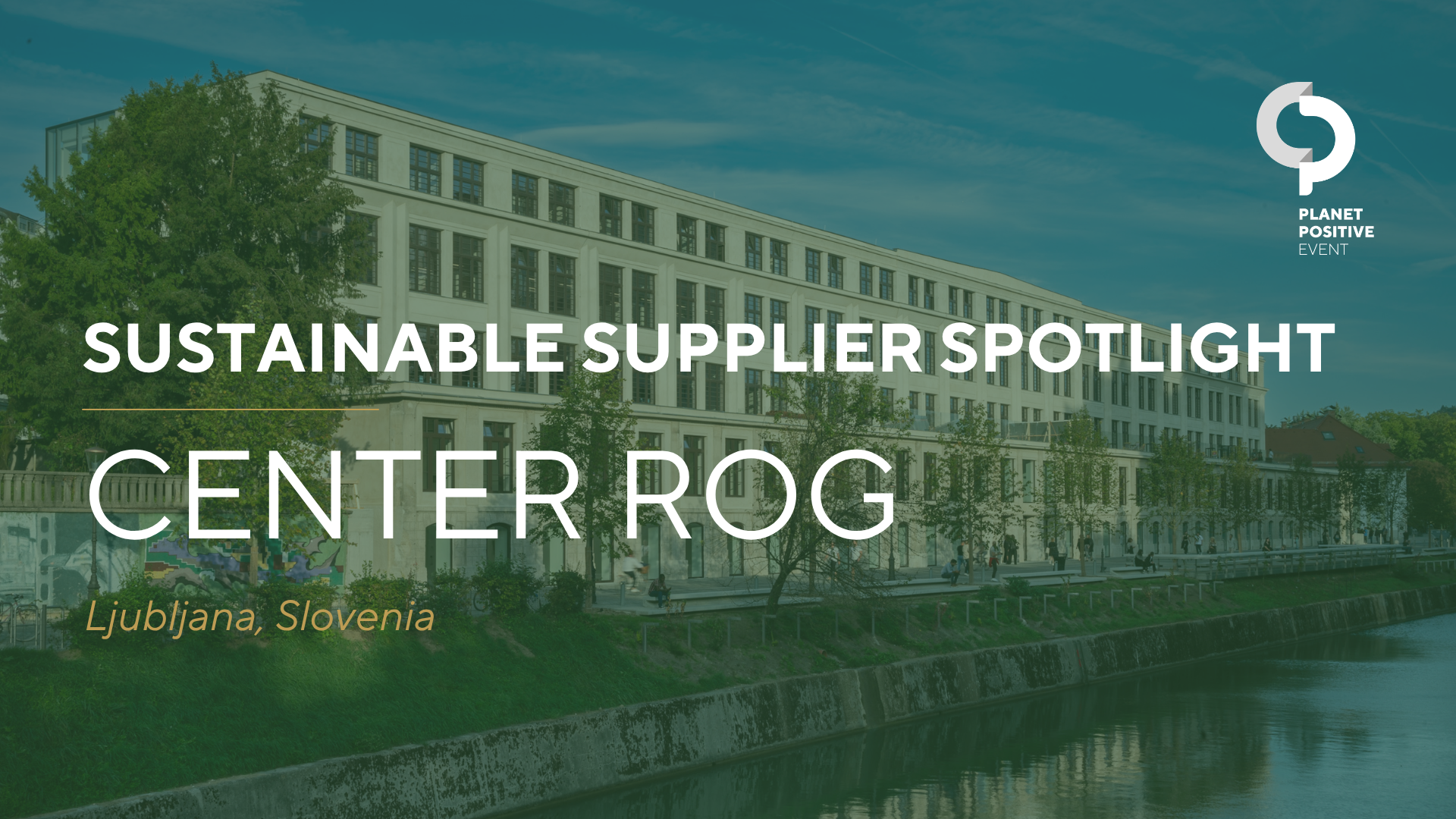
As part of our Sustainable Supplier Spotlight series, we are highlighting partners and venues that are actively embedding sustainability into their everyday operations. This edition features Center Rog, Ljubljana’s creative hub housed within a revitalised industrial building, where sustainability is approached as a practical, holistic process rather than a standalone initiative. From shared infrastructure and circular practices to sustainable mobility and local partnerships, Center Rog demonstrates how thoughtful planning and responsible resource management can reduce environmental impact while strengthening community connections and supporting creativity.
How do you design and manage your venue to support sustainable events?
At Center Rog, we understand sustainable events as a thoughtful use of space, materials, resources, and existing infrastructure.
This approach begins with the building itself — a renovated industrial site with a strong identity and protected character. We encourage event organizers to respect the architecture and history of the space and to avoid unnecessary interventions or temporary solutions that are not in line with the venue.
A large part of the technical infrastructure and equipment is provided in-house, which reduces additional deliveries, transport, and material consumption. We also collaborate with suppliers and service providers, including catering partners, who already integrate sustainable principles into their work — from local sourcing to waste reduction.
From the earliest planning stages, we guide organizers towards solutions that minimize materials, waste, transport, and unnecessary logistics, while supporting more sustainable choices throughout the event production process.
For us, sustainability is not based on isolated measures, but on a holistic approach to how events are planned and carried out.
What measures do you have in place to reduce waste during events and in your day-to-day operations?
Waste reduction at Center Rog is based on a combination of infrastructure, programmes, and everyday practices.
The venue includes clearly established waste separation and recycling systems, while both organizers and visitors are encouraged to reduce waste already in the planning phase of events.
We place strong emphasis on reuse and circular practices — both in terms of equipment and materials. Leftover materials from workshops and production processes are regularly reintegrated into new uses as part of our daily operations. This mindset is also embedded in our educational programmes, where participants, including children and young people, are actively encouraged to understand and practice reuse.
During events, we avoid single-use products whenever possible and work with partners who already follow waste reduction principles in their own operations.
Photo credit: Center Rog
How do you approach energy use, water consumption, and overall resource efficiency within the venue?
At Center Rog, our approach to energy, water, and resource efficiency is based primarily on responsible use and shared infrastructure.
The building was renovated with energy efficiency in mind, but an equally important aspect is how the space itself is used. The shared use of workshops, equipment, and infrastructure allows the same resources to serve multiple users and purposes, helping to reduce overall consumption.
We use water-saving systems and encourage responsible resource use among all users of the space. Resource efficiency is also reflected in the way events are organized and how equipment and materials are handled on a daily basis.
For us, sustainability is closely connected to everyday operational decisions and long-term responsible management of the venue.
Do you collaborate with local or sustainable suppliers and partners, and how do you encourage event organizers to make more sustainable choices?
Center Rog operates as an open collaborative space, which is why we work extensively with local partners, creators, suppliers, and service providers.
When selecting collaborators, we prioritize local actors whenever possible, helping to reduce transport needs while strengthening the local creative and cultural ecosystem. Many of our partners already integrate sustainable principles into the way they work.
We provide organizers with practical guidance and encourage them to make choices with a lower environmental impact — from materials and catering to logistics and production approaches.
An important aspect is also respect for the building itself. We encourage organizers to understand the venue and its industrial heritage and to avoid interventions or solutions that are not in line with its character.
In this way, sustainability is built through collaboration and concrete decision-making rather than treated only as a general principle.
Photo credit: Center Rog
How do you support low-impact mobility for visitors and event participants?
Center Rog is located in the centre of Ljubljana, where most destinations are easily accessible on foot, by bicycle, or by public transport.
We actively encourage visitors and event participants to choose these options, and we guide organizers to communicate sustainable mobility choices clearly in their invitations and event information.
Due to the venue’s location and the city’s mobility infrastructure, arriving without a car is the easiest option for most visitors, which significantly reduces the environmental impact of events.
Do you follow any sustainability guidelines, certifications, or internal standards, and what are your future goals in this area?
At Center Rog, sustainability is understood as part of our everyday operations rather than as a separate certification system.
Our practices are informed by broader sustainability frameworks at both the city and EU level, but above all by the way we manage the venue, programmes, and collaborations — from shared infrastructure and circular practices to supporting projects with social and environmental impact.
At the moment, we are more focused on developing concrete practices and continuously improving our operations than on pursuing formal certifications.
Looking ahead, we aim to further develop and monitor these practices in a more systematic way and continue strengthening sustainability across all areas of our work.
Photo credit: Center Rog
What inspires your commitment to sustainability, and why is it important for Center Rog as a space and community hub?
Center Rog’s commitment to sustainability comes directly from the nature and history of the space itself.
The transformation of an industrial building into a contemporary creative hub is already an example of reuse and of rethinking how existing structures can serve new purposes.
For us, sustainability is not only an environmental issue, but also a way of working — connected to shared use, accessibility, community, and support for projects with broader social value.
As a public and community-oriented space, we see sustainability as something that is reflected in everyday decisions: how we create, collaborate, organize events, and use shared resources.






Leave a Reply